
Understanding the Vitreous and Retina: The Essentials of Sight
The vitreous and retina are two interconnected structures located at the back of the eye, and their health is absolutely essential for clear, functional vision. As specialists in vitreoretinal care, we are dedicated to diagnosing and treating conditions affecting these vital parts of the eye.
The retina is a thin layer of specialized tissue lining the back wall of the eye. It functions much like the film in a traditional camera or the sensor in a digital camera.
-
Function: It is responsible for receiving light that has been focused by the cornea and lens. This light is converted into electrical signals by millions of specialized cells, namely the photoreceptors (rods for dim light and peripheral vision, and cones for color and fine detail).
-
Signal Transmission: These electrical signals are then transmitted through the optic nerve to the brain, where they are interpreted as the images we see.
-
The Macula: A critical part of the retina is the macula, a small central area responsible for our sharp, detailed, central vision—the vision needed for reading, driving, and recognizing faces.
- 2. The Vitreous: The Eye’s Clear Gel
The vitreous body (or simply vitreous) is a clear, jelly-like substance that fills the large space in the center of the eye, located between the lens and the retina.
-
Function: It serves two primary roles:
-
It helps the eye maintain its round shape and structure.
-
It keeps the retina pressed firmly against the back wall of the eye.
-
-
Composition: The vitreous is approximately 99% water, with the remaining 1% consisting of collagen fibers, hyaluronic acid, and other substances that give it its gel-like consistency.
-
Vitreous Degeneration: As we age, the vitreous gel naturally starts to liquefy and shrink, often causing it to separate from the retina. This is a common process that can sometimes lead to the perception of floaters or flashing lights.
- Common Vitreoretinal Conditions We Treat
The interaction between the vitreous and the retina is delicate, and problems in either area can severely impact vision. Our clinic specializes in treating a wide range of these conditions:
-
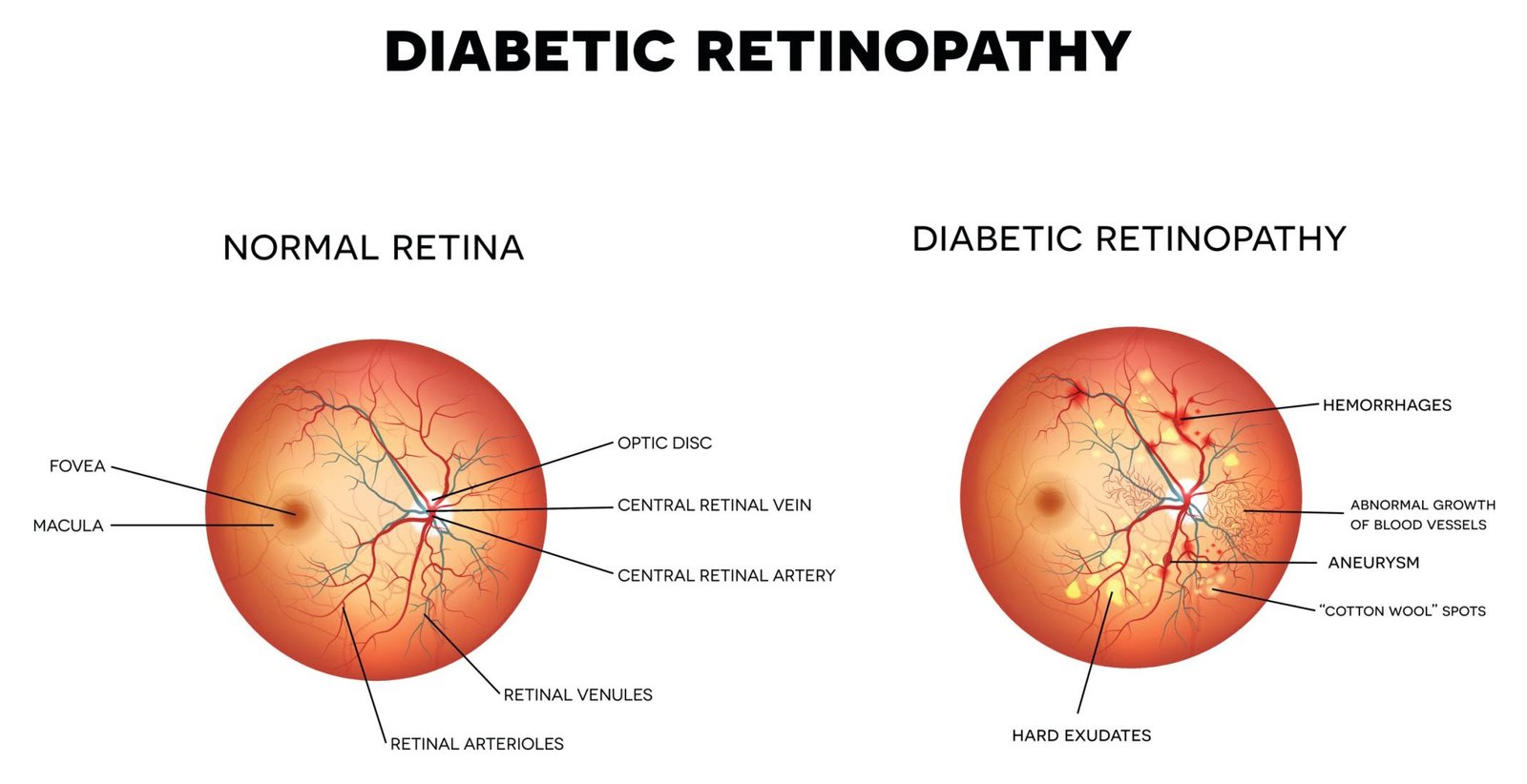
Diabetic Retinopathy: Damage to the retinal blood vessels caused by long-term high blood sugar in diabetic patients.
Age-related Macular Degeneration (AMD): Progressive damage to the macula, which is the leading cause of central vision loss in older adults.
Retinal Detachment: A sight-threatening emergency where the retina pulls away from its underlying supportive tissue, requiring urgent surgery to prevent permanent vision loss.
Vitreous Hemorrhage: Bleeding into the vitreous gel, which can severely block light from reaching the retina.
Macular Hole/Pucker: Conditions affecting the macula caused by abnormal pulling or scarring from the vitreous gel.
We utilize advanced imaging techniques and cutting-edge surgical procedures to preserve and restore the vision of our patients facing these complex challenges. Regular comprehensive eye exams are the best defense against serious vitreoretinal disease.